Memory and recall
Reconstructing a day, a face, a route — retrieving on purpose rather than looking it up.
29 daysDaily brain health activities for older adults
One small, engaging activity a day — created for older adults and designed to invite curiosity, movement, attention and connection into everyday life.
€29 per calendar · Secure checkout powered by Stripe

daily brain exercises
areas of the mind
minutes a day
A new kind of everyday care
You walk into the kitchen for something specific — and then stand there, waiting for the reason to come back. It happens to everyone, and it is not a sign that anything is wrong. It is a sign of a day spent on autopilot.
We routinely check blood pressure, cholesterol and heart health. Brain health often enters the conversation only after something feels wrong. 365 Days for a Lively Mind turns that around — a few minutes, one page, one small experience at a time.
Some call it healthy aging, others simply call it aging well. Either way it is the same quiet idea: the mind stays lively when it keeps being invited to do something slightly new.

A prompt interrupts autopilot.
A short activity turns knowledge into action.
A note helps the moment become memorable.
The evidence
Behind every day there is someone who spent years looking at how the mind stays active — at memory, movement, sleep, music, attention, language and the company of other people. We read their work, and shaped what they found into something that fits into an ordinary morning.
You are never asked to take our word for it. Wherever a day rests on a particular study or talk, the page carries a QR code that takes you straight to it.
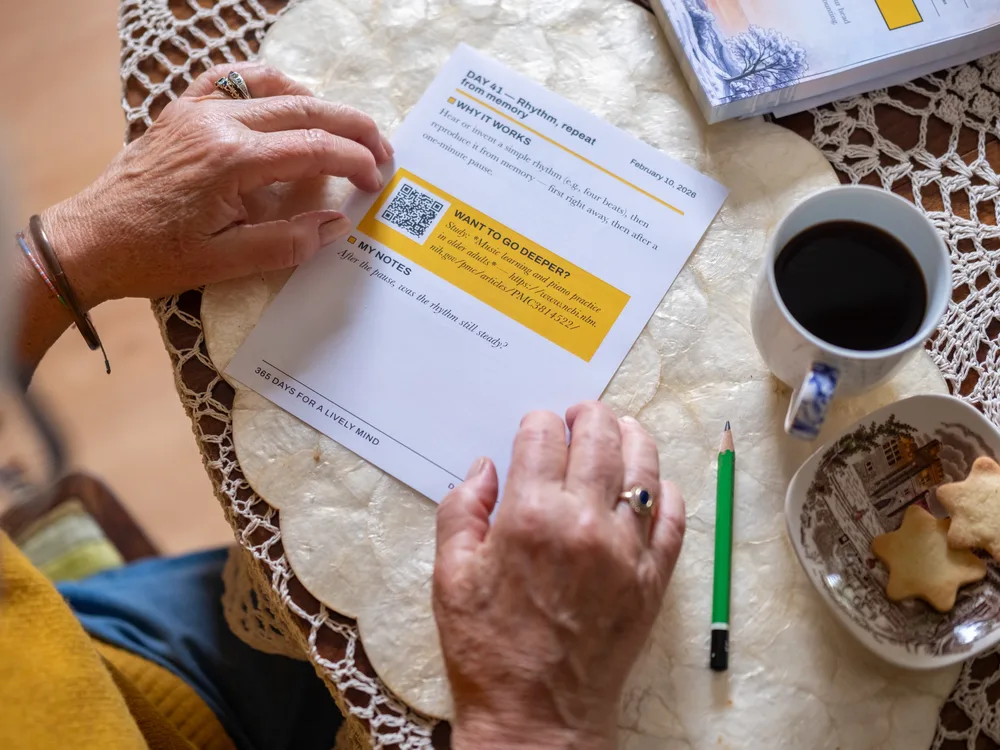
Inside the calendar
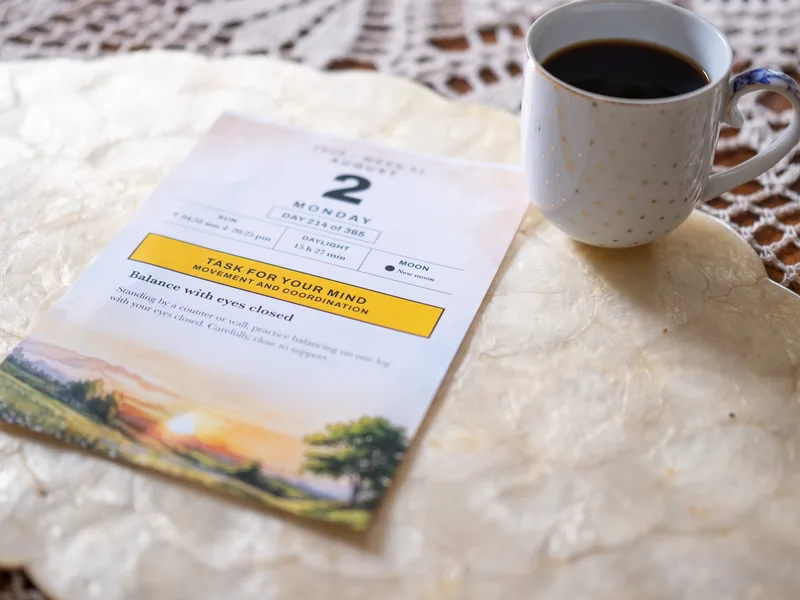
Every tear-off page holds one simple brain health activity, a plain-English explanation and space to leave your own trace. Screen-free, and easy to do at the kitchen table.
Hover over a page — or tap it — to see the other side.
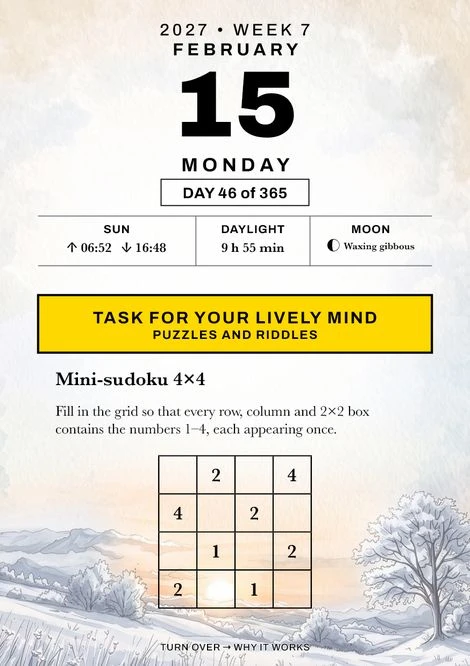
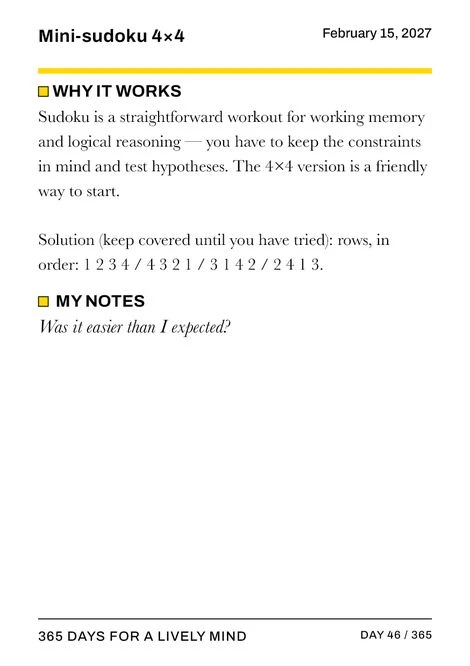
15 February · Puzzles and riddles Mini-sudoku 4×4
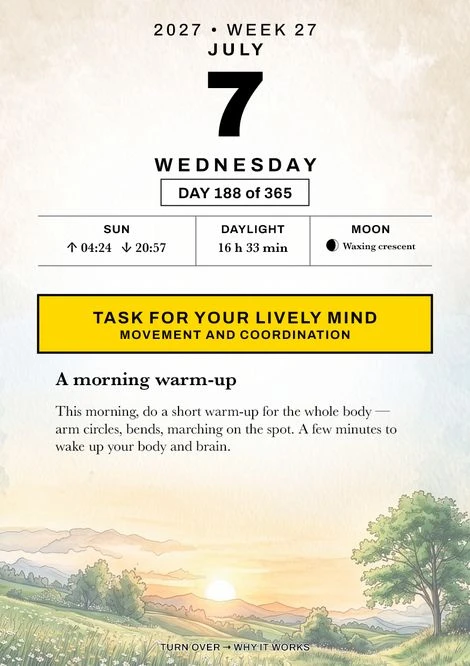
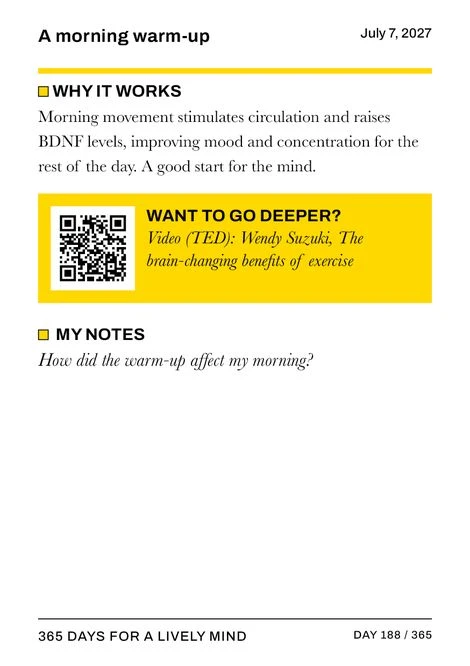
7 July · Movement and coordination A morning warm-up
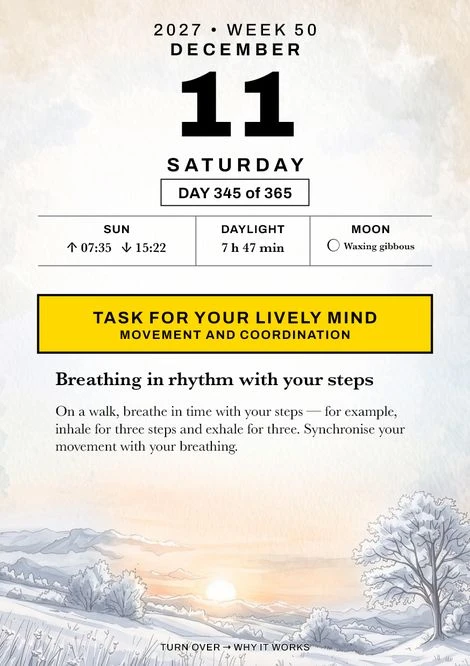
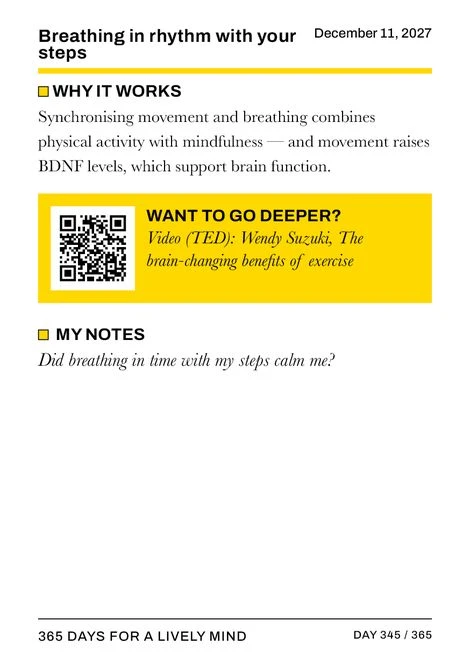
11 December · Movement and coordination Breathing in rhythm with your steps
Variety keeps it lively
No area takes over. The year moves between them, so the mind is never asked for the same thing two days running.
Reconstructing a day, a face, a route — retrieving on purpose rather than looking it up.
29 daysComing back to one thing at a time, on purpose, for a few minutes.
28 daysMaps from memory, new routes home, finding your bearings without a screen.
27 daysDaylight in the morning, a walk among trees, one deliberate change on the plate.
28 daysWord games, unusual constraints, saying a familiar thing a new way.
27 daysNew endings for old stories, questions with more than one right answer.
28 daysCross-body movement, balance, a few minutes that reach the brain through the body.
28 daysTen words in a new language, one unfamiliar skill, the discomfort of being a beginner.
28 daysTapping a chorus, humming a tune from your youth, listening for one instrument.
29 daysA question never asked before, a phone call made rather than postponed.
27 daysFive shades of green, one smell named precisely, a texture with eyes closed.
28 daysMini-sudoku, magic squares, the kind of problem that holds you for five minutes.
25 daysCutlery in the other hand, a chair moved, the usual done slightly differently.
28 daysThe habit
“We are what we repeatedly do. Excellence, then, is not an act, but a habit.”
Will Durant, summarising Aristotle · The Story of Philosophy, 1926
That is what the Calendar is for. It sits where you can see it, asks for one page each morning, and then leaves you to your day.
Large print, one task, about five minutes. And a small stack of torn pages that grows quietly beside you, so you can see how far you have come.
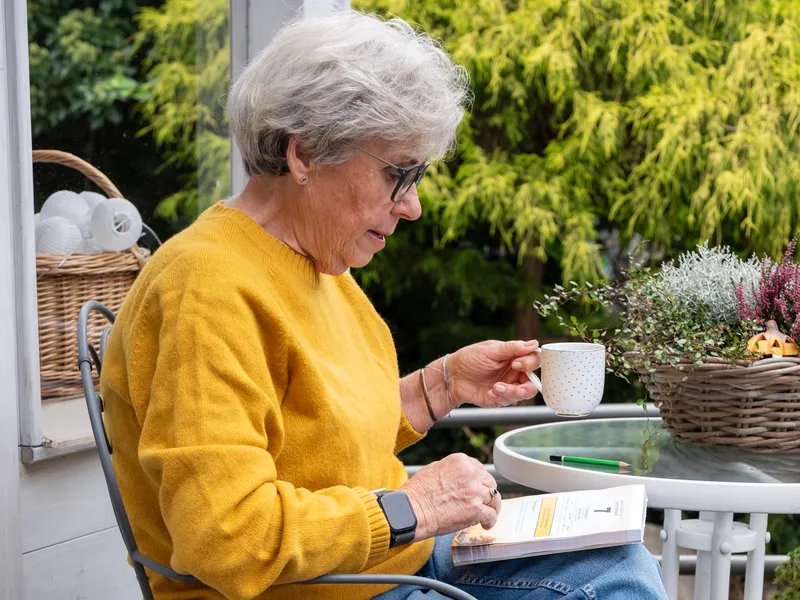
Your morning starts with one small gesture. Nothing to switch on, nothing to sign in to.
Short enough to fit into a morning that is already full, and gentle enough to come back to tomorrow.
On the back you will find why it works, where the evidence comes from, and a question or two about how it went — with room to write, if you feel like it.
Made for real homes
Keep the calendar where it naturally becomes part of the day — on a wall you pass each morning, beside your favourite chair or on the table where a page can begin a conversation.
In the box
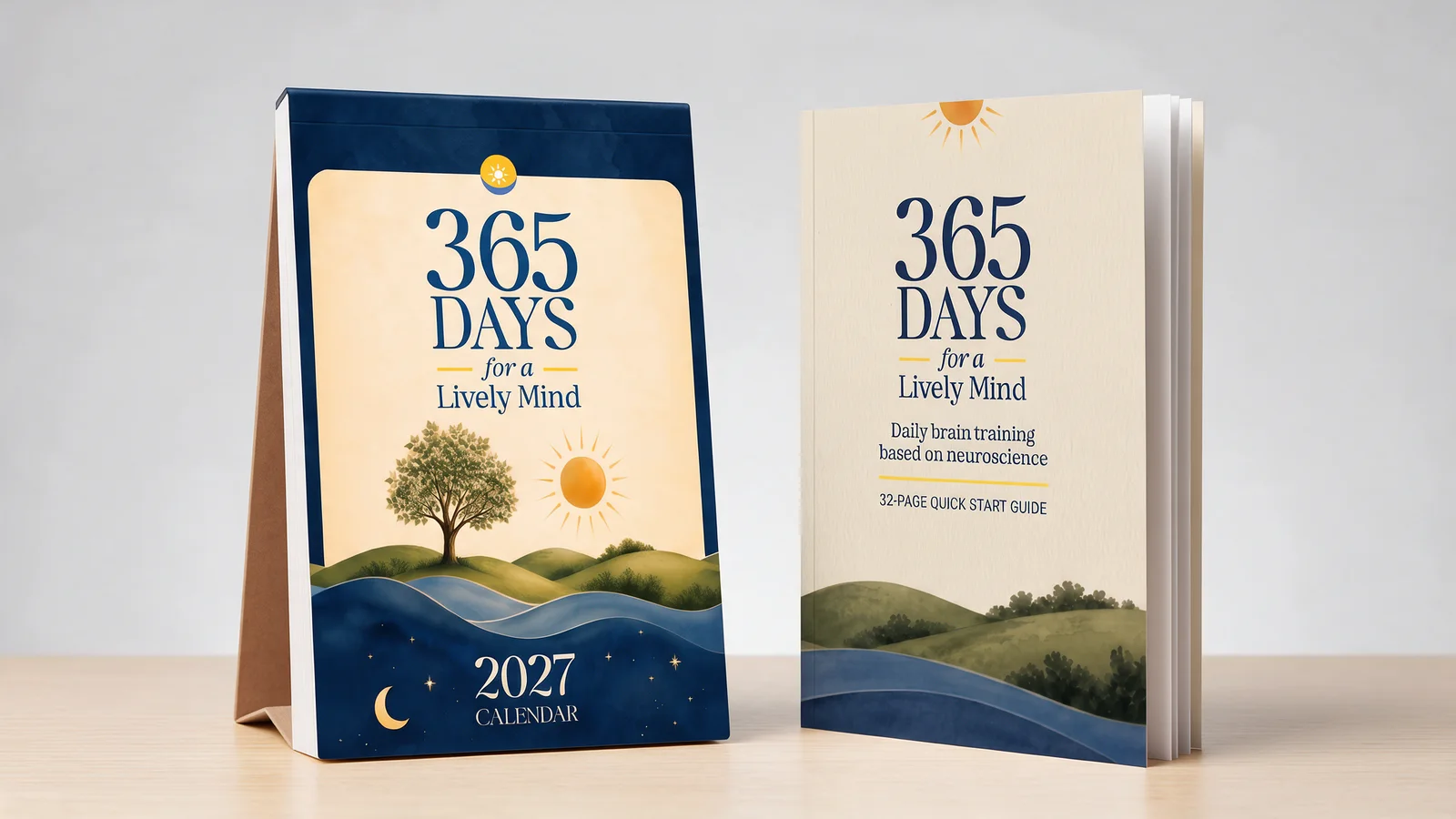
One you use every morning. The other you read once, at the start, and it makes the whole year make sense.
One
365 pages, A5, large print, on a stiff board that stands on its own.
Two included
Not a leaflet. The reason the year holds together.
Who it is for
The same calendar, arriving in three quite different situations.
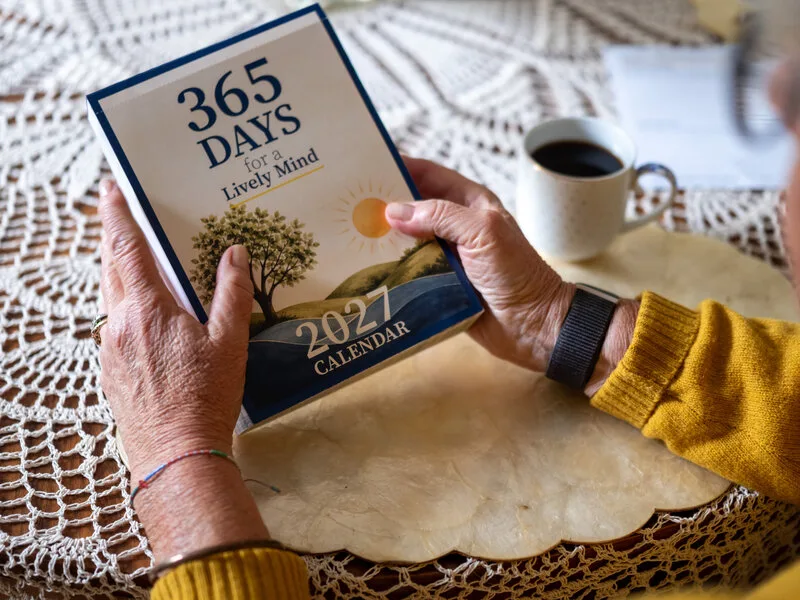
When the days start to look alike and you would rather do something about it than read another article about it. No course, no app, no account.

Screen-free, and one of the few gifts for parents who have everything that is still in use in November. It stays on the table and quietly asks for five minutes, every morning.
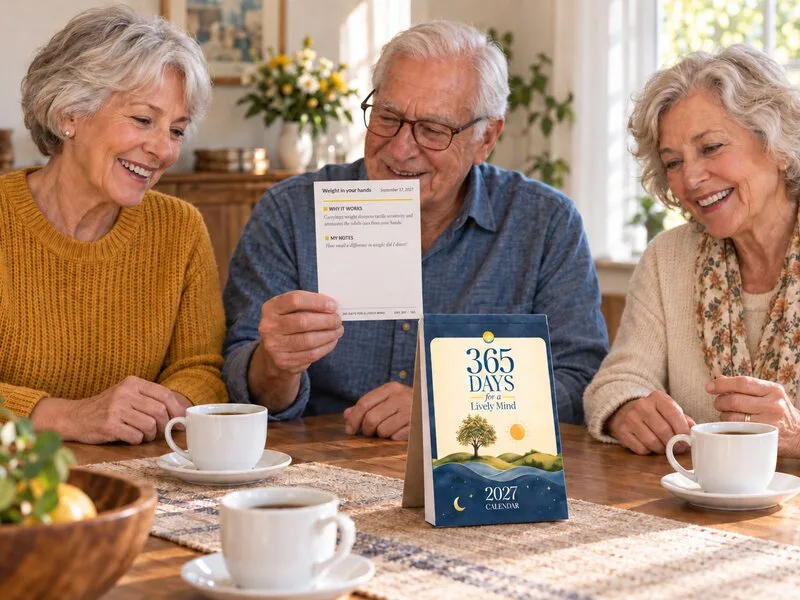
Senior clubs, libraries, care homes. Several people doing the same day have something to talk about — and a habit is easier to keep when someone else has it too.
Good to know
No. It is an educational wellbeing calendar, not a diagnostic tool, treatment or guarantee against cognitive decline. If you are worried about symptoms, speak with a qualified healthcare professional.
Most activities take around 5–15 minutes. Some can become longer conversations, walks or creative moments if you wish.
You pay for three calendars and receive four, for €87 instead of €116. Every one of them comes with the booklet.
Yes — with every single one, including the free fourth.
No. Day one is simply the first page you tear off.
Payment is processed securely by Stripe on its hosted checkout page. This website does not store your card details.
The calendar draws on research into movement, sleep, learning, attention, relationships and cognitive reserve. Evidence varies by activity, and we say so plainly: this is a practical engagement tool, not a clinical intervention.
They are short, varied daily brain exercises that invite movement, memory, attention, creativity and connection. Some people describe this kind of novelty-based activity as neurobics; here, the emphasis is on enjoyable, evidence-informed participation rather than scores or medical promises.
If you would like to send copies to different gift recipients, please complete separate orders for each delivery address or contact us directly at contact@livelymind365.com.
Yes, we provide standard VAT/tax invoices for organizations, libraries, senior clubs, and care facilities upon request during or after checkout.
€29 per calendar · Free 16-page guide booklet included · Ships second half of November
One more thing
Most people start with one person in mind. Then they begin to count — a mother, a father-in-law, the neighbour who lives alone, a friend from the walking group. There are more older adults in your life than you would guess, so we made the fourth calendar free.
Every calendar comes with the 16-page booklet.